Who was stuck
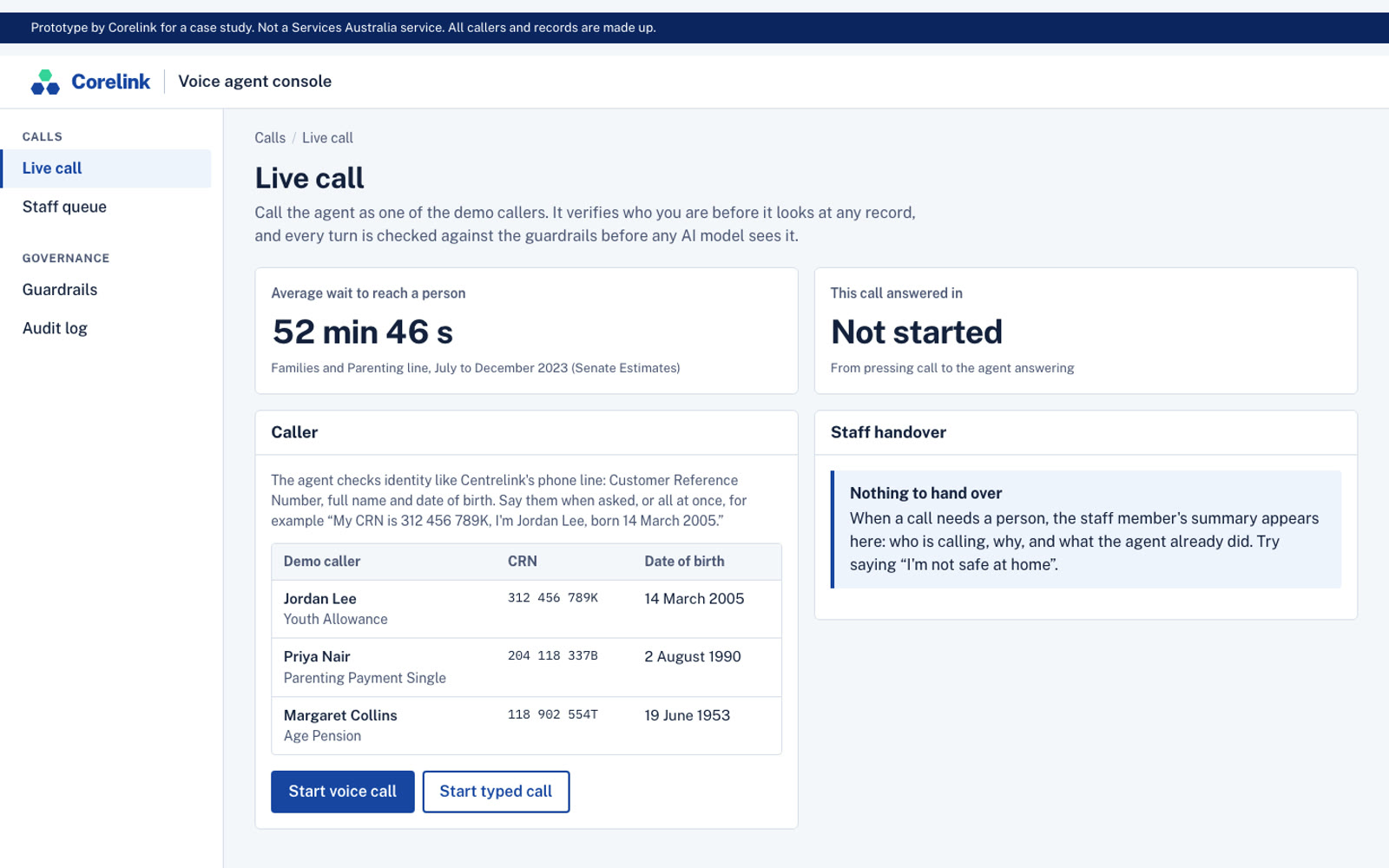
A parent calling Centrelink to ask when their next payment lands. The average wait on the Families and Parenting line was 52 minutes (Senate Estimates, July to December 2023), and the answer they need takes one sentence.
Why it happens
Every call joins the same queue, whether it's a simple question or someone in real trouble. Staff time goes on questions a system could answer, while the calls that need a person wait just as long.
What I built
A voice agent that answers straight away, handles the low-risk tasks, and knows exactly when to step aside.
- Answers simple questions like "when's my next payment?" instantly, shown beside the 52-minute average it replaces.
- Hands off to a person immediately when a caller says they're not safe, with a summary so the staff member doesn't make them repeat themselves.
- Refuses to touch bank details, debts or eligibility, and points the caller to myGov or a person instead. These rules are enforced in code before any model sees the caller's words.
- A guardrails page where judges could switch tasks on and off and add trigger phrases, with changes applying on the caller's next sentence, plus an audit trail of every decision.
The call I made
Some rules can't be switched off. Judges could turn most tasks on and off from the guardrails page, but not the important ones: it will never change bank details, and anyone who says they're not safe goes straight to a person. Those are where a mistake really hurts someone, so I didn't want them to depend on a setting.
What's next
This was built as a working demo for a case competition, so it hasn't been tested with real callers. The point was to show the idea can work: judges could call it, try to break it, and switch the guardrails on and off themselves. Testing it with real Centrelink calls would be the next step.